The Map in Your Basket: Why the Same Sofa Costs £80 More North of Perth
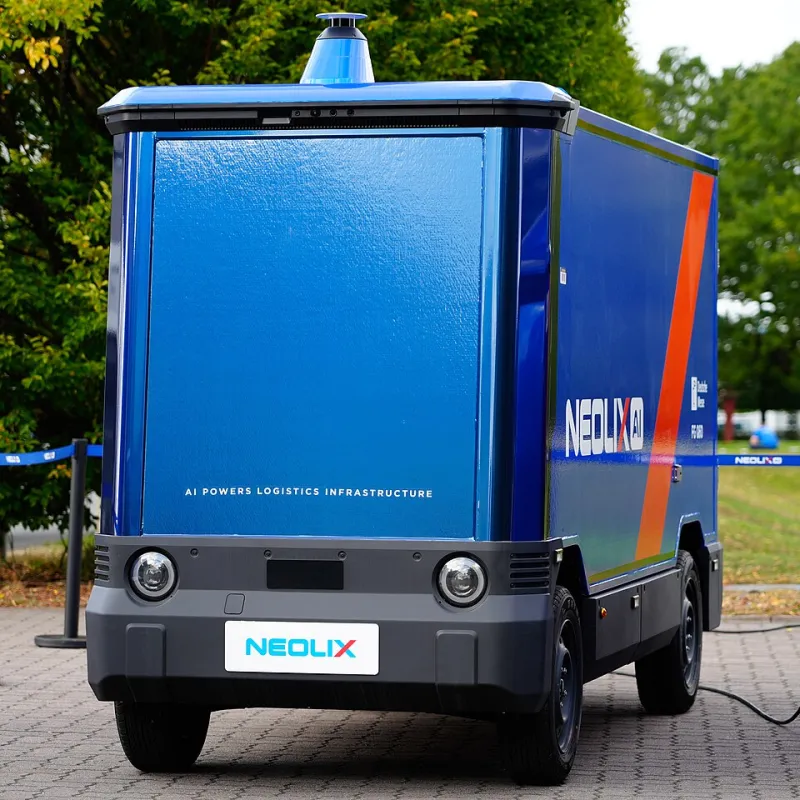
Photo: MarcelX42, CC BY-SA 4.0, via Wikimedia Commons
You have picked the sofa. It is £699, the page says 'free UK delivery', and you are already picturing it against the wall. Then you type your postcode, IV2, and a £79.95 line appears at checkout. Same sofa. Same fabric. Same warehouse in the Midlands. Apparently a different country.
This is the postcode premium, and it is one of the last places on the UK high street where the price on the label genuinely is not the price you pay. It is not always a scam and it is not always unfair. But it is almost always invisible until the moment you have emotionally committed.
'UK mainland' is a phrase with a hidden map
Retailers do not all mean the same thing by UK delivery. Some mean the four nations. Some mean Great Britain. Some mean 'the mainland', by which they mean a shape that stops somewhere around Perth, excludes every island, and treats Northern Ireland as an overseas territory with a ferry habit.
The postcodes most likely to trigger a surcharge: IV, KW, HS, ZE, PA20 and above, PH19 and above, parts of KA27 and KA28, BT, IM, JE, GY, PO30 to PO41 for the Isle of Wight, TR21 to TR25 for the Isles of Scilly, and the odd corner of AB and DD. That is millions of people paying a different price for identical goods, and most of them find out at step three of a five-step checkout.
Two surcharges wearing the same coat
Here is the test that separates the honest charge from the padding.
A courier moving a 1kg parcel to Kyle of Lochalsh pays broadly what it costs to move the same parcel to Croydon. Royal Mail's standard parcel pricing does not suddenly jump at the Highland line. So when a clothing retailer adds £9.95 of 'remote area delivery' to a pair of jeans, that is not cost recovery. That is margin with a map printed on it.
Now price up a two-man furniture delivery to a croft outside Inverness. The van drives up, delivers one sofa and drives back empty. Pallet networks charge by zone, and the top zone costs real money. So when a sofa retailer adds £79 to reach IV, that number is not automatically a rip-off. It might be £5 of profit and £74 of diesel, driver time and a wasted return leg.
The way to tell the difference: compare the surcharge with the weight and the carrier. Heavy, bulky, needs two people, needs a ferry? Expect to pay. Under 2kg, goes in a mail sack? Question it hard.
How to see the map before you fall in love
A few habits will save you an evening.
Put your postcode in first. Most sites only reveal delivery cost at the address stage. Enter your real postcode before you get attached to a colourway.
Search the delivery page for your prefix. Press Ctrl+F and type IV, BT, HS, KW. If the words 'excluded postcodes' appear anywhere on that page, read the table before you read anything else.
Check what they mean by UK. Look in the terms for 'mainland' and see where it stops. A retailer that says 'UK mainland only' and then lists twenty prefixes is telling you something useful.
Ask for a written quote. Chat or email, before you order: 'Please confirm the total delivered price to IV2 3XX, including all surcharges.' Keep the reply. If a fee appears afterwards, you now have a document.
The rule that actually protects you
Under the Consumer Contracts Regulations 2013, the total price including delivery has to be given to you before you order. If a charge was never disclosed and never agreed, you are not on the hook for it. You can refuse to pay it, and if it has already been taken, you can ask for it back.
That does not mean every surcharge is refundable. It means a surprise is not the same as a term you agreed to. There is a difference between a delivery page that lists Highland charges in a table you did not read, and a retailer that springs a fee at the final click. The first is annoying. The second is arguable.
What actually works if you live off the map
Compare total delivered price, not sticker price. Three retailers, three baskets, three final totals with your postcode in. The cheapest headline price is regularly not the cheapest sofa.
Look for retailers running one flat UK price. There are furniture firms, mattress sellers and a growing number of online-only brands that quote a single delivered price to every postcode in the country. Worth a bookmark.
Consider a mainland delivery address. A parcel hotel or a friend in Glasgow can turn an £80 surcharge into a £6 holding fee, though you then own the problem of moving a sofa the last 150 miles. For small parcels it is often a straight win. For furniture, price the van hire before you commit.
Check collection points properly. Click and collect is brilliant until you realise the nearest participating store is a 90-minute drive, at which point the fuel and the lost afternoon have eaten the saving.
Buy local where the price is close. A 10% local premium on a sofa you can sit on, sold by someone who will come back if it squeaks, is frequently the better deal.
And finally, remember that a fair surcharge is fair. If the total delivered price to your door beats every alternative, pay it and move on. The point is not to refuse all Highland charges. The point is to know which ones you are actually paying for, and which ones are just a postcode tax dressed up as logistics.